Setup & logistics
RV Utility Setup: Power, Water, and Sewer on Your Property
What it actually takes to connect a temporary RV at a home, and what Agile RV Housing handles for you. Setup is usually complete within about a week, and within 48 hours in most areas.
What utility hookups do I need to run a motorhome as a full-time guest house?
Three connections: power, water, sewer. Power is a dedicated 30-amp or 50-amp RV receptacle installed by a licensed electrician, not a household outlet. Water is a potable-rated hose off an exterior spigot with a pressure regulator, with freeze protection added in cold months. Sewer is a connection to your sewer cleanout or septic system, or a scheduled pump-out service on the unit's holding tanks. Add a firm, level pad and you have everything a motorhome or camper needs to run as full-time living quarters on a property. The sections below cover each one in the order that decides your timeline.
Power
Electrical service is the part of setup that determines your timeline, so it is the first thing we scope.
30-amp versus 50-amp service
Smaller travel trailers run on 30-amp service. Most larger fifth wheels and family floorplans need 50-amp service to run air conditioning, heat, and kitchen appliances simultaneously without tripping. We confirm which your assigned unit requires before delivery so the electrical work is scoped correctly the first time.
Why a household outlet is not enough
A standard household outlet delivers 15 or 20 amps. That is well below what an RV draws in continuous use. It trips breakers, and running an extension cord for months is a genuine fire risk. A licensed electrician installs a proper dedicated receptacle instead.
Three ways power gets delivered
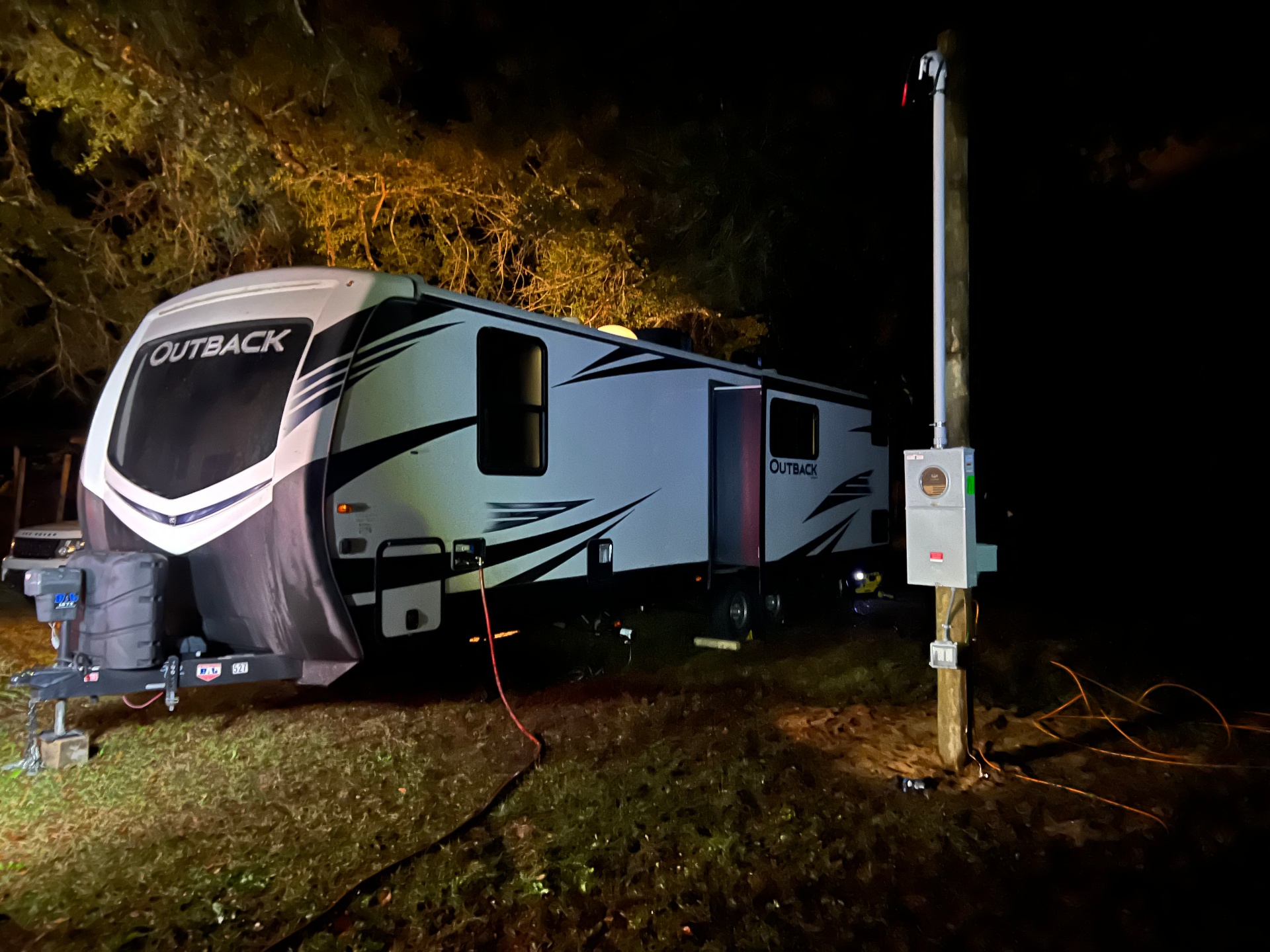
If the damaged home still has usable service, an electrician can add a dedicated RV receptacle off the existing panel. If the panel is unavailable or the home's power is shut off (common after a fire or major storm), a temporary power pole is set on the property: a utility-authorized meter and receptacle independent of the house, the same arrangement used on construction sites. In limited cases a generator bridges the gap, though it is a short-term measure rather than a months-long solution.
Electrical work almost always requires a permit and inspection. We coordinate the licensed electrician, the utility, and the filing.
Water
Water is usually the simplest of the three connections. In most cases the RV connects to an exterior hose bib on the house using a potable-rated water hose and a pressure regulator, which protects the unit's plumbing from municipal pressure that runs higher than an RV is built for.
If the home's water is shut off at the meter, the connection can often be made ahead of the damaged section of plumbing, or the utility can restore service to an exterior line only. Where no supply is workable at all, the unit's fresh water tank is filled on a scheduled delivery.
Freeze protection in cold climates
In cold-weather months the water line between the house and the unit is the most vulnerable point on the whole setup. Heated hose, insulation, and skirting around the unit's underbelly keep the line and the tanks from freezing. Our winter RV housing page covers the full cold-weather package.
Skirting closes off the underbelly and holds ground warmth. A heated water hose replaces the standard hose from roughly the first hard frost. Tank heaters keep the holding tanks liquid. And the furnace, not space heaters alone, keeps the plumbing bays warm, because it ducts heat to them.
Sewer
There are three ways to handle waste, in order of preference.
Direct connection to a sewer cleanout
If your property has an accessible sewer cleanout, the unit connects directly to it with a sealed adapter. This is the cleanest option and requires nothing from you during the stay.
Septic system connection
On septic properties the unit can usually connect at the tank inlet, provided the system has capacity for the additional household. We confirm capacity before committing to this approach: overloading a septic field creates a much larger problem than the one it solves.
Scheduled holding tank service
Where neither is available, the unit runs on its holding tanks and a pump service empties them on a schedule: typically weekly or biweekly depending on household size. It is routine, it is scheduled in advance, and it is handled by the service provider rather than by you.
What if connecting to sewer costs too much?
This question comes up because people get real quotes. Homeowners planning a build have been quoted tens of thousands of dollars to bring sewer and water connections to raw land, and some counties will not issue a temporary occupancy permit without them. Before that number kills the plan, ask the county whether a serviced holding tank meets their sanitation requirement; in many places it does. A scheduled pump-out costs a small fraction of a utility connection, it is set up in days rather than weeks, and it is how a large share of our placements run. Where a county does insist on a hard connection, the septic inlet is usually the cheaper of the two paths, and we scope it before anything ships.
Site placement and permits
The unit needs a reasonably firm, reasonably level spot with clear tow access: a driveway, a side yard, or a graded pad. Our driver evaluates overhead lines, gate widths, turning radius, and soft ground before placement. Once positioned, the RV is leveled and stabilized so it lives like a house rather than a parked trailer.
Permit requirements vary widely by city and county. Many jurisdictions have expedited allowances for temporary housing following a declared disaster or a documented insurance loss, and electrical work essentially always requires a permit and inspection. We check the requirements for your specific address and handle the filings. Our guide to what your county allows for a temporary RV explains the common rules, and you can request a free zoning check for your property if you want the answer for your address before delivery.
All of this coordination (delivery, leveling, electrician scheduling, utility connections, and permits) is managed by Agile RV Housing. On insurance claims it is documented as part of the setup billed under the claim. See how ALE coverage and direct carrier billing work.
Frequently asked questions about utility setup
Do I need 30-amp or 50-amp service for an RV?
It depends on the unit. Smaller travel trailers run on 30-amp service, while most larger fifth wheels and family floorplans require 50-amp service to run air conditioning, heat, and appliances at the same time. We tell you which one your assigned unit needs before delivery so the electrical work can be scoped correctly the first time.
Can I just plug the RV into my house?
Usually not safely. A standard household outlet delivers 15 or 20 amps, which is far below what an RV needs for continuous use. It will trip breakers, and running an extension cord for months is a fire risk. A licensed electrician installs a dedicated RV receptacle or a temporary power pole instead. In some cases, when the damaged home still has usable service, an electrician can tap the existing panel.
What if the power to my house is shut off?
This is common after a fire or major storm. The standard solution is a temporary power pole: a utility-authorized meter and receptacle set on your property, independent of the damaged home's service. It's the same kind of temporary service used on construction sites. We coordinate with a licensed electrician and your utility to get it installed.
How is sewer handled?
Three options, in order of preference. If your property has a sewer cleanout, the RV connects directly to it. If you're on septic, the unit can often connect to the septic system's inlet when the tank has capacity. If neither is available, a holding tank service pumps the unit on a scheduled basis, typically weekly or biweekly depending on household size.
Who handles all of this?
We do. Agile RV Housing coordinates delivery, leveling, and the power, water, and sewer connections, including scheduling the licensed electrician and any permits your municipality requires. You are not calling three trades and a permit office yourself. On insurance claims, this coordination is documented as part of the setup billed under the claim.
Do I need a permit?
Sometimes. Requirements vary widely by city and county, and many jurisdictions have expedited allowances for temporary housing after a declared disaster or documented insurance loss. Electrical work almost always requires a permit and inspection. We check local requirements for your address and handle the filings.
How long does utility setup take?
Delivery and setup usually happen within about a week, and within 48 hours in most areas. Electrical service is the usual gating factor: if a temporary power pole and a utility connection are required, the utility's scheduling can extend the timeline. We start electrical coordination in parallel with delivery rather than waiting for the unit to arrive.
What hookups do I need to live in an RV on my property full time during a build or rebuild?
A dedicated 30 or 50-amp power connection, a potable water connection with a pressure regulator, and one of three sewer arrangements: cleanout tie-in, septic connection, or scheduled pump-out service. A licensed electrician handles the power; we coordinate all three on every placement.
Is a pump-out service sanitary for months of full-time living?
Yes. The service empties and treats the tanks on a schedule sized to your household, typically weekly or biweekly, the same way portable facilities on long construction projects run for years. It is routine, sealed, and handled by the provider rather than by you.
How much does it cost to connect sewer and water for an RV?
A hard connection is quoted per property because trenching distance and the county's requirements drive it. When a quote comes back unworkable, a scheduled pump-out service usually satisfies the sanitation requirement at a small fraction of the cost. We scope both before delivery.
We handle the setup
Tell us your address and we'll scope power, water, sewer, and permits for your property.