Displaced by fire, flood, or storm?
Temporary RV Housing: Stay on Your Own Property While Your Home Is Repaired
A fully equipped RV, delivered and set up right where you live, so you can stay close to your home, your pets, and your neighborhood during the rebuild, and in most cases your insurance covers the cost.
Based on our experience helping 100+ displaced families · Usually delivered within a week, 48 hours in most areas · We typically bill insurance directly when approved.
Why Stay in an RV Instead of a Hotel?
When your home is unlivable, a hotel room across town isn't your only option. Staying on your own property keeps you close to what matters while repairs happen. Here is how long you can live in an RV on your property and what setup it takes.
Stay on your own property
Oversee the rebuild, keep your routine, sleep steps from home instead of across town.
Bring your pets
Always welcome, no real restrictions. No boarding, nobody left behind.
Keep your family together
One space for everyone, near schools, work, and the life you already have.
Modern, clean, and spacious
A full kitchen, real bathroom, and comfortable living space. Clean, well-kept units, not a rough camper.
Setting Up an RV as a Home Is Harder Than It Looks: That's Where We Come In
Anyone can drop a trailer in a driveway. Making it a safe, comfortable home on a property that may have just been through a fire or flood is a different job entirely, and it's one we've done hundreds of times. Here's what actually goes into it, and what we take off your plate.
No power after the damage?
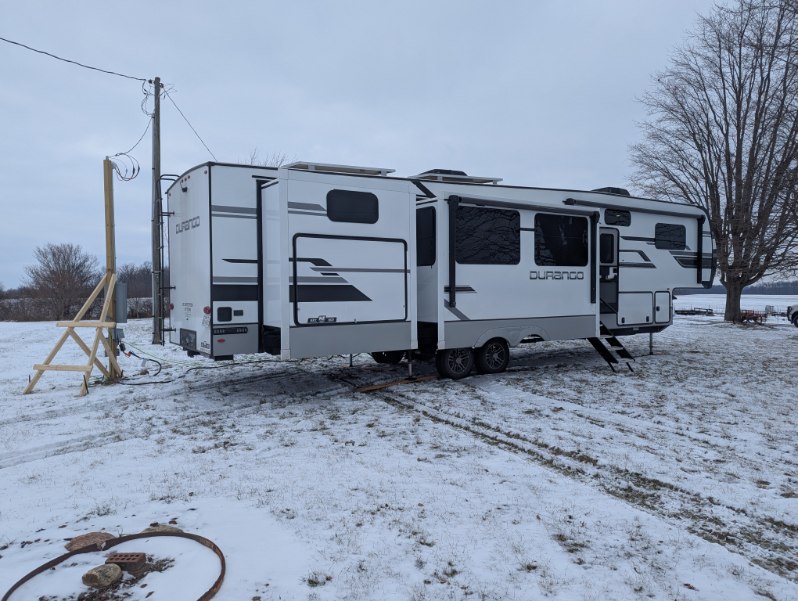
After a fire or major damage, power is often shut off entirely. We work with the power company to install a temporary pole so your RV has reliable electricity.
Your property needs a 50-amp RV hookup.
We arrange a licensed electrician to install it (including trenching when the layout calls for it), and the work is coordinated with your adjuster and billed to insurance. You don't pay for it.
Sewer, handled.
We tie into your septic or sewer cleanout when possible, or use serviced holding tanks, and we have creative solutions when a property is tricky.
Fresh water, simple.
A direct water connection to the RV.
We avoid generators where we can.
They're a short-term bridge only; once your hookup is ready, you're on stable shore power.
Every property is different.
We assess yours up front and plan for the variables, so there are no surprises on move-in day.
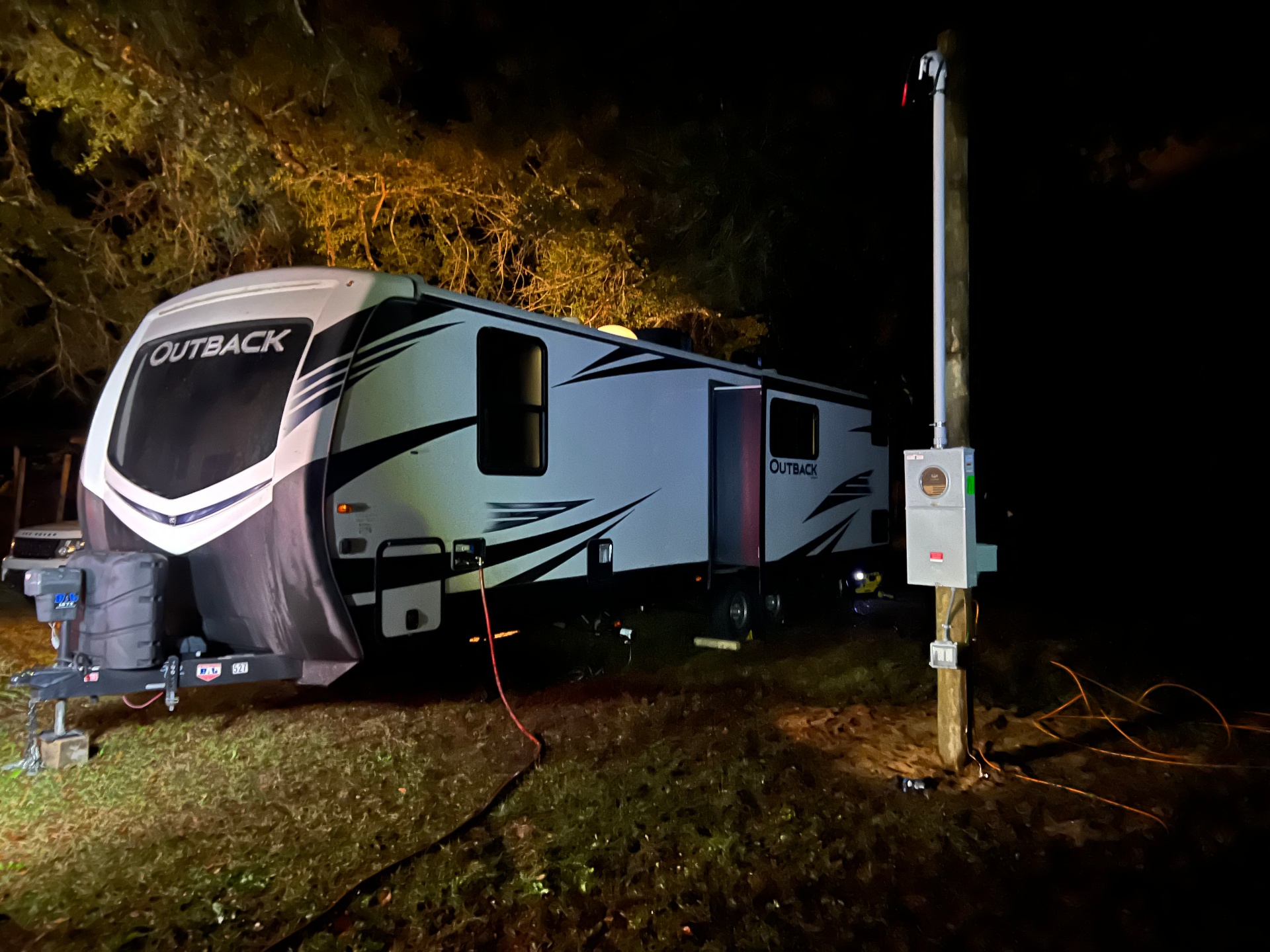
Most RV rental companies hand you keys and leave. We engineer a livable home onto your property and coordinate every detail, with you, the electrician, your municipality, and your insurance.
How Insurance Covers Your Temporary RV Housing
If your home is unlivable because of a covered event like a fire, flood, or storm, your homeowners policy may pay for your temporary housing (including an RV on your property) through Additional Living Expenses (ALE), sometimes called Loss of Use. Our service is built for homeowners going through an insurance claim, and we bill your insurance provider directly. Read more about how insurance coverage works.
What to do
- 1
Tell your insurance adjuster you'd like to stay in an RV on your property during repairs.
- 2
Call us: we'll confirm your coverage and look at your property.
- 3
We coordinate directly with your adjuster or housing agency on approval and billing, so you're not stuck in the middle.
Temporary RV housing is often covered under ALE or Loss of Use, depending on policy approval and claim limits. Where there are upfront costs we often front them and seek reimbursement from insurance directly. We work closely with all major carriers, have deep hands-on experience with the claims process, and are preferred providers for many temporary housing agencies. If a housing agency takes over billing after you've already chosen us, that's normal: nothing changes for you on the ground.
How It Works: From Your Call to Move-In
We confirm your coverage.
We make sure your claim is active and ALE can cover an RV: before anything else.
We assess your property.
We confirm access and space. If your lot can't fit an RV, you still have options (see below).
We match you to the right RV.
We walk you through floorplans and photos so the unit fits your family.
We handle zoning and permits.
Some areas restrict living in an RV; for displaced homeowners there's almost always a waiver or approved path, and we secure it.
Delivery and full setup.
We place the unit and connect power, water, and sewer.
Walkthrough and 24/7 support.
We show you how everything works, and we're a call away the entire time.
What If My Property Doesn't Have Room for an RV?
One of the most common worries we hear is "I don't think my property can fit an RV." In our experience, that's rarely the end of the conversation: it's the start of one.
We get creative with your property.
Smaller units and careful placement open up more properties than people expect. We assess your actual space first.
We use a neighbor's or family member's property.
When your own lot truly can't fit a unit, we frequently place the RV nearby instead, keeping you close to home. We've done this many times.
We secure temporary permits.
Many areas that restrict living in an RV still have exceptions and temporary permits for displaced homeowners. We check and handle it.
We arrange a nearby campground.
If placing an RV simply isn't possible, in most cases insurance will cover a suitable nearby campsite, and we help you arrange it.
A limited property doesn't mean you're out of options. Tell us your situation and we'll find the one that fits.
Comfortable, Right-Sized RVs for Your Property
Our most common unit is around 40 feet: about as large as an RV gets, with the most living space for families. When your driveway or lot has less room, we bring a smaller unit sized to fit. Our largest floorplans sleep six to eight (a master bedroom, a bunk room, and a loft for kids), while smaller units trade the bunkhouse for more kitchen and living space for couples or smaller households.
Every unit comes ready to live in: a full kitchen (stove, microwave, sink, counter space), built-in beds, a couch, and a dinette. We stock kitchen utensils and provide linens and bedding. Air conditioning is standard, internet is set up for your stay, and pets are always welcome.
How Fast Can We Get You Housed?
We maintain a distributed fleet serving the entire lower 48, so we're rarely far from where you need us. In most areas we can deliver and set up within about a week, and 48 hours is achievable depending on your location and the season. Delivery is rarely the holdup on our end: the usual limiting factor is getting the electrical hookup installed and the claim approved. Because we handle this process constantly, we often guide adjusters and housing agencies on the fastest path to approval, so everything moves as quickly as possible. Share your address and we'll give you an honest timeline.
How Long Can I Keep the RV?
As long as you need it. We rent month-to-month with a 60-day minimum and no maximum. We stay flexible so the RV is available throughout your repairs: right up until your home is ready and you move back in.
Staying Through the Winter
If your repairs run into cold weather, we fully winterize the unit (skirting, heated water lines, tank heaters), so heat, water, and plumbing keep working all season. Read more in our guide on winter RV living.
Frequently Asked Questions
Does homeowners insurance pay for an RV as temporary housing?
Often, yes. Most homeowners policies include Additional Living Expenses (ALE) or Loss of Use coverage, which can pay for temporary housing while your home is unlivable, and an RV on your property can qualify. We confirm your coverage first and coordinate billing with your adjuster, so for most homeowners there's no out-of-pocket cost.
Will I have to pay anything out of pocket?
For most homeowners, no. We coordinate everything with your adjuster or housing agency, and where there are upfront costs, we often front them and seek reimbursement from insurance directly.
How much does a temporary RV cost, and who pays for it?
It typically runs $120 to $140 per night, tax included, depending on the unit size and your location. This is a full-service rental: delivered, set up, and serviced. For insurance claims, it's billed directly to your policy. See our RV housing cost page for full details.
Are delivery, the electrician, and utility setup extra costs I have to pay?
No. Delivery, the licensed electrician, the temporary power pole, and any other utility work are coordinated with your adjuster, approved by them, and handled by us. We hire the licensed professionals and seek payment through insurance.
What if my insurance adjuster is unsure about approving an RV?
This comes up and is usually just unfamiliarity: an RV on your property is an accepted, often more affordable ALE option than a long hotel stay. We deal with adjusters daily and know how to document and present it. Call us before assuming it's a no.
Am I allowed to live in an RV on my property during repairs?
Some municipalities restrict it, but for displaced homeowners there's almost always a waiver or approved path. We check local zoning, handle the permits, and coordinate approval for you: it's a core part of what we do.
What if my property is too small for an RV?
A small or tight property rarely rules it out. We assess your space and access first. When a lot genuinely can't fit a unit, we can often place it on a neighbor's or family member's nearby property, or arrange a nearby campground, which insurance usually covers.
How are power, water, and sewer handled?
We handle all of it. We coordinate a temporary power pole and a 50-amp hookup through a licensed electrician (billed to insurance), connect fresh water directly, and manage sewer through a septic or cleanout tie-in or serviced holding tanks.
How quickly can an RV be delivered and set up?
Usually within a week, and in most areas we can be there in 48 hours, depending on your location and season. Delivery is rarely the holdup: the usual limiting factor is the electrical hookup and claim approval, which our experience helps move along quickly.
What areas do you serve?
We serve the entire lower 48 with a distributed fleet. Share your address and we'll confirm a delivery timeline for your location.
How long can I keep the RV?
There's a 60-day minimum and no maximum. We rent month-to-month and keep the unit available throughout your repairs, right up until your home is ready.
Are the RVs furnished?
Yes. Each unit has a full kitchen (stove, microwave, sink, counter space), built-in beds, a couch, and a dinette. We stock kitchen utensils and provide linens and bedding, so it's ready to live in when you move in.
Is there laundry?
RV-sized washer/dryers are available, but they're small and best for light loads. For most families we recommend a local laundry service: in most cases insurance reimburses laundry as part of your claim, and we'll point you in the right direction.
Can I stay in an RV through the winter?
Yes. For homeowners staying through cold weather, we fully winterize the unit (skirting, heated water lines, tank heaters, four-season units when needed), so heat, water, and plumbing keep working all season. See our winter RV living guide.
How many people can the RVs sleep?
Our largest models sleep six to eight: a master bedroom, a bunk room, and a loft for kids. For smaller households we match you to a floorplan with more kitchen and living space. We size the unit to your family and property.
Are pets allowed?
Yes, always: no real restrictions. Staying on your own property means your pets stay right there with you.
Displaced and Need Housing? Let's Get You Home.
Call our 24/7 line or request info online. We'll confirm your coverage, look at your property, and get you on the schedule.
Wondering about pricing? See how much temporary RV housing costs per night.